

Diagnose. Tune Up. Transform.
Customer experience consulting designed to help organizations uncover friction, better understand the people they serve and create meaningful improvements. Hands-On CX Services
Great customer experiences aren't just for large organizations. Xperience Garage helps small businesses, nonprofits, and entrepreneurs uncover friction, identify opportunities and make meaningful improvements that fit their resources.
Diagnose | Chase the unsolved problems
Tune Up | Fix what matters
Transform | Reimagine what’s next
CX DIAGNOSTIC
Chase the Unsolved Problems
Organizations become so familiar with their products, services, processes and assumptions that they stop seeing the experience through the eyes of the people they serve. Customer frustrations go unnoticed. Opportunities remain hidden. Teams work around challenges that have become "the way things are."
The Diagnose phase is designed to uncover what's really happening.
Through customer research, journey mapping, Voice of Customer activities, experience assessments, and stakeholder engagement, we help organizations develop a clear understanding of the current state, identify points of friction, and uncover opportunities for improvement.
-
Customer Experience Assessments
Current State Analysis
Journey Mapping
Voice of Customer Analysis
Persona Development
Competitive Experience Reviews
-
A clear understanding of your customers, your experience and the opportunities that can make a difference.
TUNE UP
Fix What Matters
Once the friction is identified, it's time to start making improvements.
Not every challenge requires a major transformation. Often, meaningful results come from simplifying processes, improving communication, reducing customer effort and addressing the moments that create the greatest frustration.
The Tune Up phase focuses on practical, targeted improvements that strengthen experiences and create momentum.
Together, we'll prioritize opportunities, align around actionable recommendations and focus on the changes that can create the biggest impact.
-
• Customer Journey Improvements
• Customer Communication Enhancements
• Process Simplification
• Quick-Win Identification
• Voice of Customer Action Planning
• Employee Experience Alignment
-
A stronger customer experience, reduced friction, and practical improvements that support loyalty, retention, and growth.
Customer Insight Report
Journey Maps
Opportunity Analysis
Strategic Recommendations
Roadmap
TRANSFORM
Reimagine What's Next
Sometimes the challenge isn't a broken process.
Sometimes it's the need for a new vision.
The Transform phase is designed for organizations ready to rethink how they deliver value, engage customers and create experiences. These initiatives often involve larger organizational shifts, strategic planning, culture change and customer-centered transformation.
Transformation isn't simply fixing what's broken. It's creating a future state experience that better serves customers, employees, and the business.
By combining customer insights, strategic planning, and change leadership, we help organizations create a roadmap for meaningful, measurable and sustainable change.
-
• Customer Experience Strategy
• Voice of Customer Program Development
• Experience Vision & Roadmap Creation
• Customer-Centered Transformation
• Service Design
• Organizational Change Management
• Experience Governance & Measurement
• Cross-Functional Alignment
-
A customer-centric vision, a practical roadmap and a clear path toward meaningful transformation.
welcome to the XG Showroom
The examples below represent real problems from past engagements. I've shared them as a way to demonstrate the way I think about problem discovery, exploration and solution.
-
The Problem: A health insurance provider serving more than three million members experienced a significant increase in call center volume related to online bill payment. Members were either unable to complete payment online or encountered barriers that prevented them from successfully navigating the process.
The organization understood that the issue was affecting both customer satisfaction and operational efficiency but lacked visibility into where the experience was breaking down.
The Discovery: As a Customer Experience Consultant, my first step was to facilitate a series of cross-functional discovery workshops involving teams responsible for member communications, billing, digital channels, customer service, and operations.
Together, we documented every touchpoint, communication, channel interaction, and handoff within the bill-pay experience. We also identified ownership across departments to better understand how each team contributed to the overall member journey.
Using this information, I developed a series of customer journey maps that visualized the end-to-end experience from the member's perspective rather than the organization's internal structure.
Insight
The journey maps revealed that members were not failing because online bill pay was unavailable or malfunctioning. They were failing because the experience was fragmented.
Members were being directed to a bill-pay destination through multiple communications and channels, but critical account requirements needed to access the payment process were never communicated. As a result, customers arrived at what appeared to be the correct destination only to encounter an unexpected barrier with no clear next step.
What appeared to be a billing issue was actually a coordination and communication issue.
Each department had optimized its own communication from a business perspective, but no one had designed the experience across the entire journey. The communications operated independently of one another, creating a disconnected experience that repeatedly led members into a dead end.
The Result: The customer journeys provided leadership with a comprehensive view of how departmental decisions combined to shape the member experience.
By visualizing the experience end-to-end, we were able to identify the specific points where communication breakdowns occurred and demonstrate how seemingly unrelated messages contributed to member confusion and increased call center demand.
The work shifted the conversation from improving a single digital touchpoint to improving the entire bill-pay ecosystem. Rather than treating the symptom, the organization gained visibility into the underlying experience gaps and the need for greater coordination across teams responsible for member communications.
-
The Problem: A global medical device manufacturer was preparing for a major product launch but lacked visibility into the current state of its digital ecosystem.
Over time, the organization had developed a large network of websites, microsites, product pages, and digital experiences across multiple markets and business units. While these properties served individual purposes, there was little understanding of how they connected, where users moved between experiences, or where breakdowns occurred.
With a high-profile launch approaching, the team needed a clear picture of the existing experience landscape but lacked the resources and capacity to undertake the effort themselves.
The Discovery: I was engaged to create a comprehensive view of the organization's digital ecosystem and identify opportunities for improvement before launch.
Starting from the company's primary global homepage, I systematically mapped each connected experience, documenting site objectives, audience pathways, navigation models, dependencies, disconnects, and dead ends.
As the map expanded, patterns began to emerge. Many digital properties had been designed independently, resulting in inconsistent user flows, competing objectives, redundant content, and disconnected experiences that made it difficult for users to move through the ecosystem efficiently.
The exercise transformed a complex and largely invisible network of digital experiences into a single, understandable view.
Insight
What initially appeared to be a collection of individual websites was actually an interconnected ecosystem with significant experience gaps between properties.
Users frequently encountered inconsistent navigation, unclear transitions between sites, and dead-end pathways that prevented them from progressing naturally through their journey. Because these issues existed across multiple teams and business units, they had remained largely invisible to leadership.
The challenge was not the quality of individual sites. The challenge was the lack of a cohesive digital experience strategy across the ecosystem.
The Result: I developed a visual experience architecture that illustrated the current-state ecosystem, highlighting customer pathways, disconnected experiences, friction points and opportunities for simplification.
The work gave leadership a holistic view of how customers experienced the organization across digital channels and helped identify opportunities to streamline navigation, strengthen cross-site connections, and improve overall experience continuity.
Most importantly, the findings provided valuable guidance for the upcoming product launch by identifying where launch content should be positioned, how customers would discover it, and which experience gaps could negatively impact engagement and adoption.
-
The Problem: I joined a marketing transformation program after its launch, when significant work had already been completed. While the program had a defined starting point and a clear vision of the desired future state, it lacked a structured roadmap that connected the two.
Without a clear path forward, it was difficult to measure progress, identify dependencies, understand resource requirements, or communicate how individual initiatives contributed to transformation outcomes. My objective was to create a practical framework that would translate the vision into an actionable, measurable plan.
The Discovery: Because much of the foundational work had been completed before I joined the program, I began by analyzing existing strategy documents, workstreams, program artifacts, and planning materials.
I found that all of the necessary components already existed, but they were fragmented and disconnected. The transformation narrative was incomplete.
Using the available information, I synthesized a clear transformation vision that aligned with the program's objectives and established measurable outcomes and target timelines. From there, I developed a structured transformation framework consisting of strategic initiatives, supporting projects, key dependencies, and resource considerations.
The resulting roadmap provided an end-to-end view of the transformation journey, linking current-state activities directly to future-state business outcomes and creating a mechanism for tracking progress over time.
The Result: Drawing on methodologies I had successfully used in a previous organization, I presented the framework to marketing leadership and key stakeholders.
The response was overwhelmingly positive, with several leaders commenting that this level of structure and visibility would have been valuable at the beginning of the program. Although leadership ultimately decided not to retrofit the existing program because of timing considerations and implementation effort, the framework highlighted important gaps in transformation planning and demonstrated how strategic roadmapping can improve alignment, prioritization and execution.
This experience reinforced an important lesson: successful transformation requires more than a compelling vision. It requires a clear, measurable path that enables teams to understand where they are, where they are going, and how they will get there. I remain proud of this work because it demonstrates the value of bringing structure, transparency, and enterprise thinking to complex change initiatives.
-
PROBLEM: A Fortune 100 consumer banking institution conducted an employee engagement survey across its Technology and Digital organizations. One of the most concerning results for leadership was a low score on the question:
"Do you have the right tools to do your job effectively?"
Leadership initially assumed that team members lacked the systems, platforms, or technologies required to perform their work. Our consulting team was engaged to uncover the root causes behind the survey response and identify opportunities to improve the employee experience.
DISCOVERY: We began by designing a research plan that included approximately 30 in-depth interviews with employees across Technology and Digital teams. Participants represented a range of roles, tenures, experience levels, and responsibilities to ensure a broad organizational perspective.
Through qualitative analysis, we synthesized the interviews into key themes and developed a set of employee personas that reflected common behaviors, motivations, frustrations, and needs. These personas allowed us to move beyond isolated observations and identify systemic patterns affecting employee experience and effectiveness.
As the research progressed, an unexpected finding emerged. Employees consistently described challenges that had little to do with physical or digital tools. Instead, they expressed uncertainty around decision-making, prioritization, and ownership.
Insight: What leadership believed was a tooling problem was, in reality, a leadership and empowerment challenge.
Many Product Owners felt reluctant to make decisions because they feared making mistakes or facing negative consequences. Teams lacked a clear strategic vision against which they could prioritize work confidently. As a result, employees often delayed decisions, escalated routine choices, or waited for direction rather than taking action.
The absence of a shared decision-making framework created friction that employees interpreted as lacking the "tools" needed to do their jobs effectively.
RESULT: We translated our findings into a future-state vision, a set of strategic initiatives, and a roadmap for improvement. One of the most significant initiatives was titled "Product Owners Are Leaders."
The initiative focused on strengthening product ownership capabilities through clearer decision rights, leadership expectations, strategic alignment, and empowerment practices. Rather than investing solely in new technologies or platforms, leadership gained a deeper understanding that improving employee experience required cultural and organizational change.
The work shifted the conversation from "What tools do employees need?" to "What conditions enable employees to make decisions confidently and effectively?" By uncovering the underlying issue, the organization was better positioned to address the root cause rather than treating the symptom.
-
The Problem: The global banking system underwent a significant as a result of the transition away from LIBOR (London Interbank Offered Rate, was a global benchmark interest rate that major banks used to set the cost of short-term loans with one another. Learn More). I was brought in as a CX Consultant to manage the customer side of this change. These are wholesale customers like Amazon, healthcare systems and Universities. My client for this 2-year project was a US-based bank that this is in the top 50 of the Fortune 500 list.
The Discovery: I faced two challenges with this contract. 1) I had no experience with banking or LIBOR and 2) COVID hit and we were in lockdown. I recalibrated the communication and education plan from in-person meetings to virtual sessions. I worked closely with subject matter experts who helped create content, while I focused on meeting logistics, production, content approvals and follow up. My follow up consisted of feedback surveys that helped me evolve the program so it would continue to meet customer needs and organization legal and compliance requirements.
The Result: The transition away from LIBOR took place, our customers were well informed along the way, we experienced no disruption in service, and very few customer complaints if any. The LIBOR transition was inevitable, my goal was to keep the topic relevant and our customers prepared.
about xperience garage
Xperience Garage was created with a simple idea in mind: build a place where problems are welcomed, challenged, explored and solved.
At its core, XG was designed to be a problem-solving engine, bringing together different perspectives, experiences and ways of thinking to help uncover hidden opportunities.
The inspiration behind XG comes from an idea that continues to guide me: meaningful change starts when we're willing to see the world through perspectives other than our own.
Inspired by the philosophy of musicians like Joe Strummer (The Clash), it seems true that the most valuable insights come from the people closest to the problem, yet their voices often go unheard. By listening deeply, embracing diverse perspectives, and challenging conventional thinking, we uncover opportunities that others may miss and help us create experiences that put people back at the center.
The punk rock ethos was never about rebellion for its own sake. It was about questioning accepted wisdom, amplifying overlooked voices and believing that meaningful change is possible. That's still the foundation of how I approach customer experience today.
Because great customer experiences don't happen by accident.
They happen when organizations have the curiosity to ask better questions, the courage to challenge assumptions, and the commitment to solve the right problems.
Diagnose. Tune Up. Transform.
Curious? Let's Talk.
Send us a quick note and we’ll get back within one business day.
XG Crew
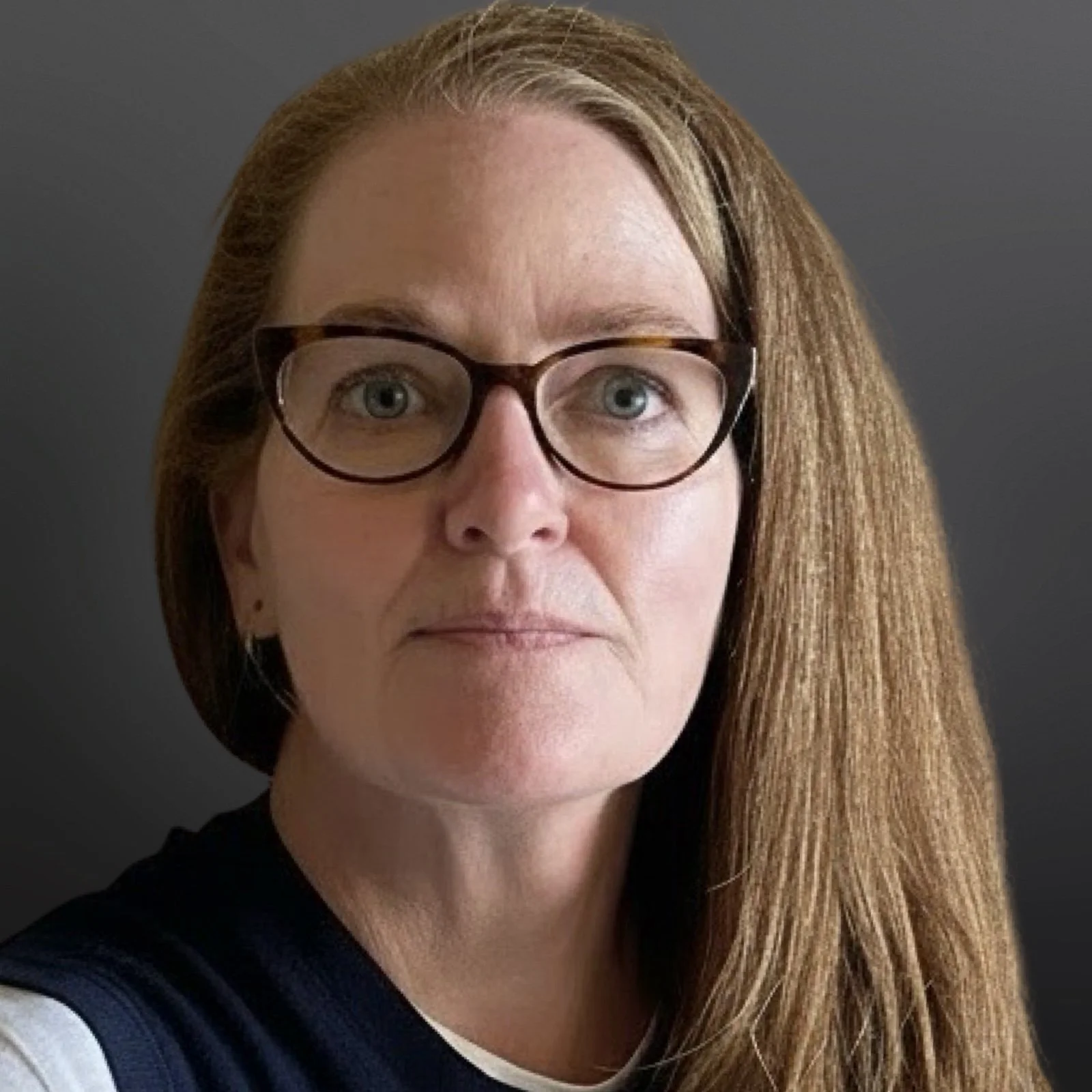
I'm a strategic customer experience leader with more than 20 years of experience helping organizations bring clarity to complex challenges. My work focuses on uncovering patterns, connecting seemingly unrelated ideas, and helping organizations solve the problems that stand between their goals and the people they serve.
Through Xperience Garage, I combine systems thinking, customer-centered research, and practical problem-solving to uncover hidden friction, challenge assumptions, and identify opportunities for meaningful improvement. Whether we're diagnosing current-state challenges, tuning up key experiences, or leading transformational change, I believe the best solutions start with curiosity, empathy, and a willingness to see the world through a different point of view.
Visit me on LinkedIn!